


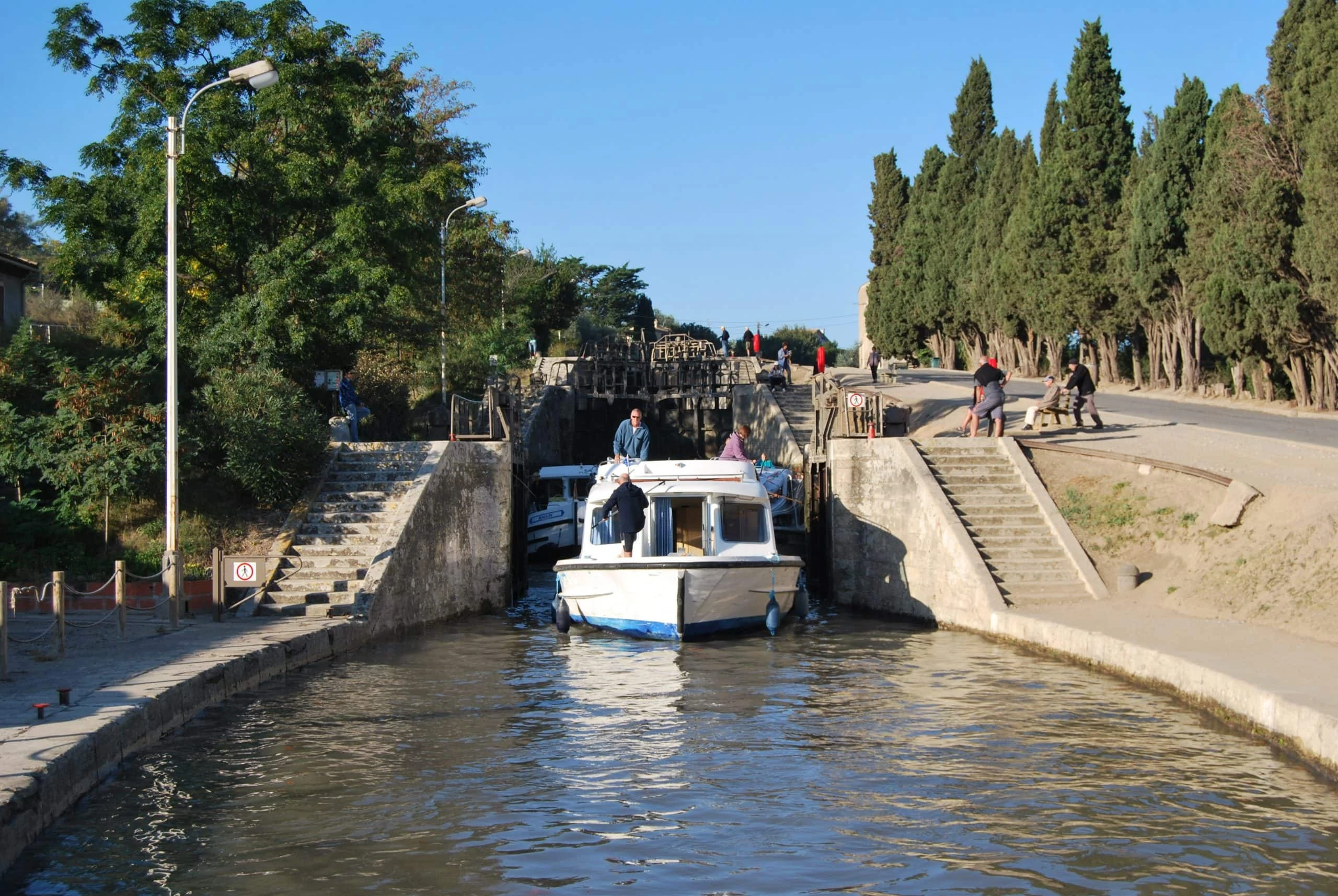
If you have already booked your river cruise or you are thinking of doing it you will have heard of the locks and you probably don't know their meaning or whether or not they are easy to maneuver. In that case, this article is intended from Danfluvial for you.
Is easier than it looks like.
The word lock means in Latin the "separate waters" The locks are hydraulic works of art that allow ships to navigate by joining the two navigable parts with different levels. A chamber, isolated by two doors, in which the water level can be varied, thus allowing boats to go up or down a significant slope of the river or canal.
Crossing a lock is a fairly slow operation; since it is necessary to balance the water levels, first with the stretch of channel where the ship is located and then with the other level towards which the ship will leave. Technically, the height limit that can be overcome with a single lock is approximately 25 m.
Going through locks is one of the funniest parts of the river cruise and allows everyone to get involved. When you go through the first one, you will see that the procedure is simple and you will be looking forward to the next one.

Types of locks and how they work
Depending on the navigation region of your river cruise, the locks can be manual, electric or automatic; they work exactly the same way.
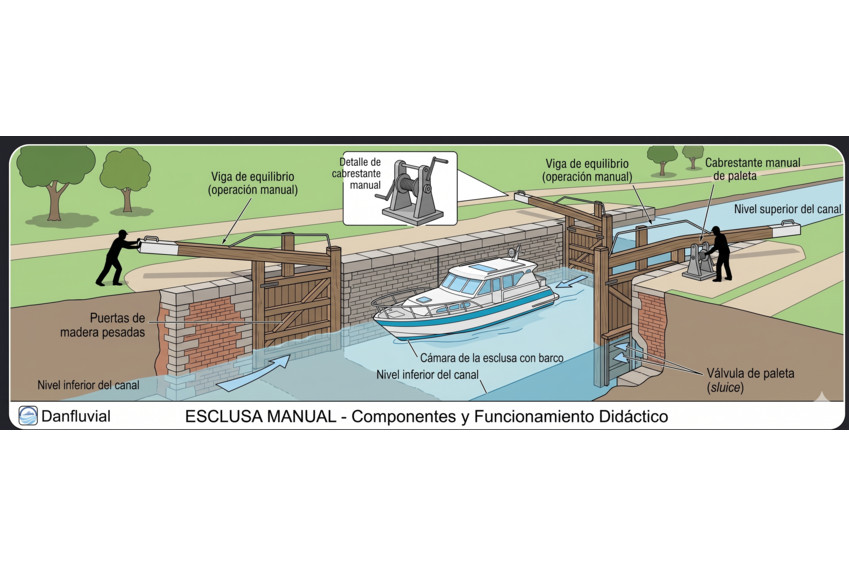
Manual locks:
En estas esclusas, tú eres el protagonista. Son estructuras tradicionales donde la fuerza física y la coordinación son clave. Sigue estos pasos para una maniobra segura:
- Preparación: Antes de entrar, asegúrate de que las compuertas opuestas estén totalmente cerradas para mantener el nivel del agua.
- Acceso: Entra muy lentamente y pasa las amarras sin anudarlas; el barco debe poder subir o bajar libremente.
- Operación: Acciona las paletas para llenar o vaciar la cámara. Una vez nivelado el agua, empuja la viga de equilibrio para abrir las pesadas puertas de madera.
- Finalización: Tras salir, recuerda cerrar las puertas y bajar las paletas para dejar la esclusa lista para el siguiente navegante.

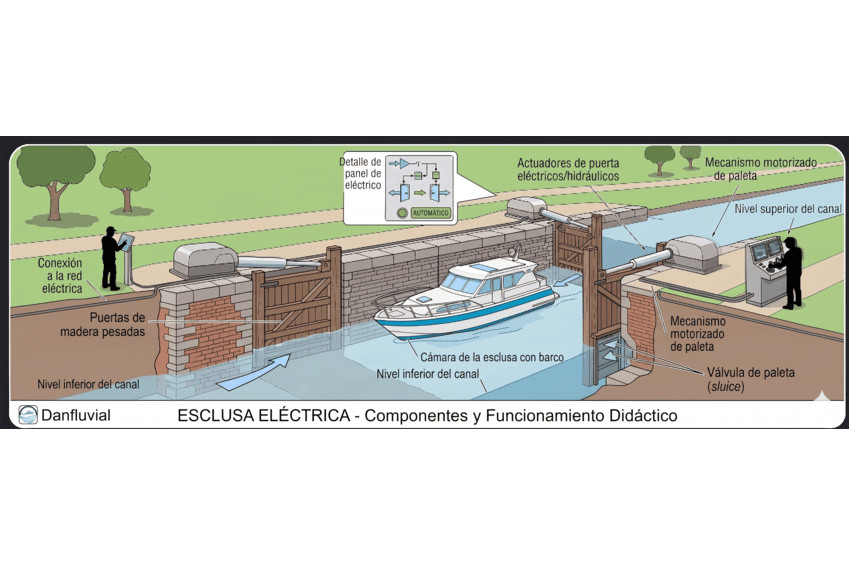
The electric locks:
Las esclusas eléctricas facilitan el tránsito gracias a mecanismos motorizados. En la mayoría de los casos, contarás con la ayuda de un esclusero que supervisará la maniobra.
Señalización: Observa siempre los semáforos antes de aproximarte.
El Esclusero: Es la autoridad en este punto. Sigue sus instrucciones sobre dónde posicionar el barco.
Mecanismos: Los actuadores eléctricos o hidráulicos se encargan de mover las compuertas y válvulas, permitiéndote disfrutar del proceso sin esfuerzo físico.
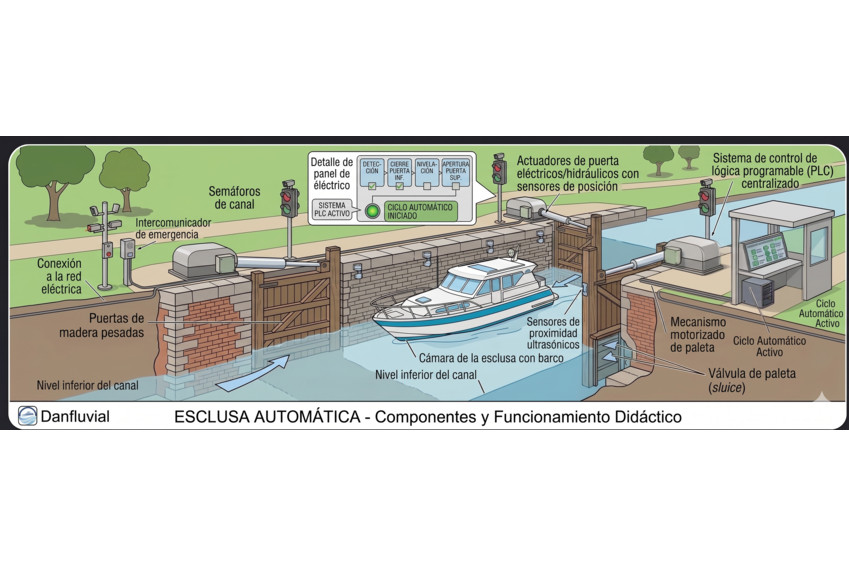
Automatic locks:
Diseñadas para una autonomía total, estas esclusas funcionan mediante sistemas de detección avanzada. Los usuarios las operan libremente siguiendo la lógica del sistema:
Detección inteligente: Al aproximarte, un detector de orilla o un radar detectará tu presencia para iniciar el ciclo automático.
Ciclo de llenado/vaciado: El sistema PLC (Control Lógico Programable) gestiona la apertura de válvulas y compuertas de forma secuencial y segura.
Seguridad Activa: Cámaras de CCTV y sensores de proximidad monitorean constantemente la cámara. Ante cualquier imprevisto, utiliza el intercomunicador de emergencia ubicado en el panel de control.
We recommend you watch the video on how to pass a lock on our channel:
Consejos para un paso perfecto
Navegar por las esclusas es una experiencia agradable si se siguen estas pautas fundamentales de convivencia y seguridad:
Normas de Prioridad y Cortesía
Prioridad: Los barcos comerciales siempre tienen preferencia sobre los de recreo.
Horarios: Respeta estrictamente los tiempos de apertura y descanso de los escluseros.
Paciencia: En épocas de sequía, el esclusero agrupará varios barcos antes de operar.
Gratuidad: El servicio es gratuito, aunque se agradecen las propinas. Recuerda que el esclusero no tiene la obligación de amarrar tu barco.
Comunicación: Si piensas detenerte entre dos esclusas, avisa al esclusero para que no preparen la siguiente maniobra en vano.
Maniobra de Aproximación
- Anuncio: A unos 200 metros, reduce la velocidad y avisa de tu llegada con uno o dos claxonazos.
- Entrada: Si las puertas están abiertas, entra directamente y amarra.
- Espera segura: Si hay barcos saliendo, espera a 100 metros para no obstaculizar y evitar remolinos.
In all cases:
- Maneuver in slow motion
- Go up and down stairs with caution as they are often slippery.
- Never jump out of the lock onto the roof of the ship
- Once the passage through the lock is completed, securely collect the moorings on the deck of the ship.
Curiosities
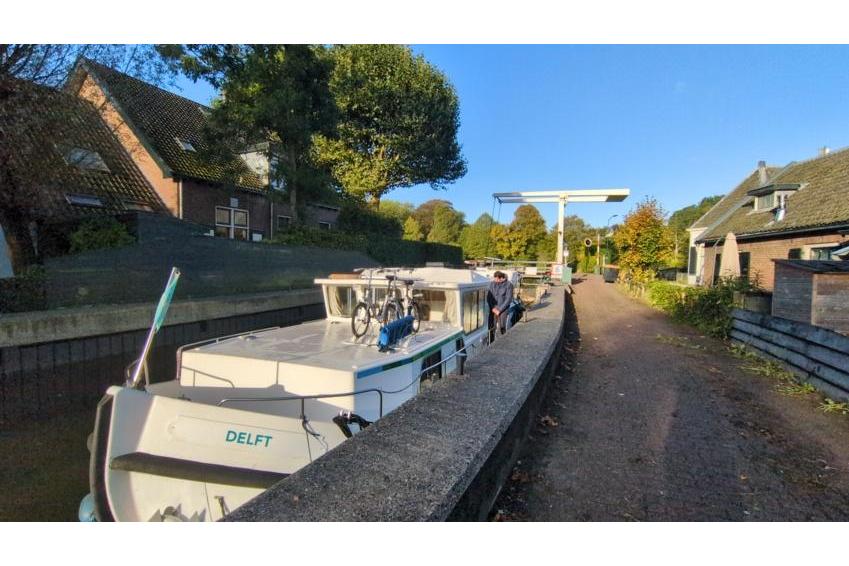
El sistema de presa existe desde hace más de 2000 años, se crearon para que los barcos pudieran atravesar las presas que acarreo en un principio, la creación de pequeñas «puertas desagüe» (estrechamiento).
From the 15th century on, docks with sea gates appeared on European water courses. These docks are an approach of two gates that allow saving the water lost during each passage (paleo-lock). This system is no longer used, although it was the direct precursor to modern locks.
Starting in the Renaissance, Dutch and Italian engineers such as Leonardo da Vinci perfected this system by working especially on the jambs and the pressure they support. Progressive improvements (guillotine doors, then arched, and from the 19th century cylindrical gates) will make it possible to balance the pressure on the doors and the construction of locks that are increasingly manageable (5 m and more).


